Reliable electrical power is one of the foundations of a successful commercial facility. Whether the building is a healthcare environment, data center, school, office complex, industrial site, multi-family property, or municipal facility, the electrical distribution system needs to operate safely and consistently. At the center of that system is switchgear. That is why switchgear testing and maintenance should be treated as a critical part of facility management, not an optional task that gets pushed aside until something fails.
Switchgear controls, protects, and isolates electrical equipment. It helps route power through the building, protects circuits during faults, and gives qualified workers a way to safely manage sections of the electrical system. When switchgear is properly maintained, it supports uptime, safety, equipment life, and operational confidence. When it is neglected, the risks can include nuisance trips, overheating, equipment damage, extended outages, safety hazards, and expensive emergency repairs.
For commercial facilities, the question is not whether switchgear needs attention. The better question is whether the testing and maintenance program is structured enough to catch issues before they become costly problems.
What Is Switchgear?
Switchgear is a broad term used to describe assemblies of electrical disconnect switches, circuit breakers, fuses, controls, relays, busbars, meters, and protective devices. In simple terms, it helps manage the flow of electricity through a facility and protects the system when abnormal conditions occur.
Commercial switchgear may be low-voltage, medium-voltage, metal-enclosed, metal-clad, indoor, outdoor, draw-out, fixed-mounted, or part of a larger power distribution system. The exact configuration depends on the size of the building, the electrical load, the application, and the level of control required.
Dominion Electric’s Aparamenta / Distribución de energía division focuses on complex power distribution needs across commercial, industrial, infrastructure, healthcare, data center, and multi-family environments.
Why Switchgear Testing and Maintenance Matters
Switchgear is often expected to sit quietly in the background. It may not receive attention every day, but when it is needed, it has to perform correctly. That is especially true during a fault, outage, transfer event, maintenance shutdown, or emergency condition.
Testing and maintenance matter because electrical equipment changes over time. Connections loosen. Insulation ages. Dust and contamination build up. Moisture can enter enclosures. Breakers can become sluggish. Protective devices can fall out of calibration. Mechanical parts can wear. Thermal stress can damage components. Even small problems can become serious when high levels of current are involved.
A structured maintenance program helps facilities:
Reduce unexpected outages
Improve worker safety
Extend equipment life
Identify overheating or loose connections
Verify breaker operation
Support compliance documentation
Improve system reliability
Plan repairs before emergencies happen
Reduce costly downtime
Protect sensitive equipment
Dominion’s existing article on switchgear maintenance explains how hidden risks can develop when maintenance documentation, inspections, and testing are not handled properly.
What Should Be Included in a Switchgear Maintenance Program?
A strong switchgear maintenance program should combine visual inspections, mechanical checks, electrical testing, cleaning, documentation, and corrective action. The exact scope depends on the equipment type, manufacturer recommendations, operating environment, system criticality, and applicable standards.
Common maintenance activities may include:
Visual inspection of enclosures and components
Checking for signs of overheating
Inspecting insulation condition
Cleaning dust, dirt, and contamination
Checking ventilation and environmental conditions
Inspecting busbars and connections
Torque verification where appropriate
Breaker exercising and inspection
Protective relay testing
Insulation resistance testing
Contact resistance testing
Grounding system checks
Control wiring inspection
Metering and instrumentation checks
Thermal imaging
Reviewing maintenance logs
Updating equipment documentation
These tasks help create a fuller picture of equipment health. A visual inspection alone may catch obvious damage, but electrical testing can reveal developing issues that are not visible from the outside.
Common Signs Switchgear Needs Attention
Facilities should not wait for a complete failure before investigating switchgear problems. There are often warning signs that equipment needs inspection, testing, or repair.
Common red flags include:
Unusual smells near electrical rooms
Buzzing, humming, or crackling sounds
Visible discoloration around components
Breaker trips without a clear cause
Hot spots found during thermal scans
Moisture inside electrical rooms
Corrosion on enclosures or hardware
Damaged labels or missing documentation
Difficulty operating breakers or switches
Outdated single-line diagrams
Recent load additions without review
Evidence of pests, dust, or contamination
Some signs are easy to overlook, especially in facilities where electrical rooms are rarely visited unless something goes wrong. That is why scheduled inspections are so important.
The Role of Testing
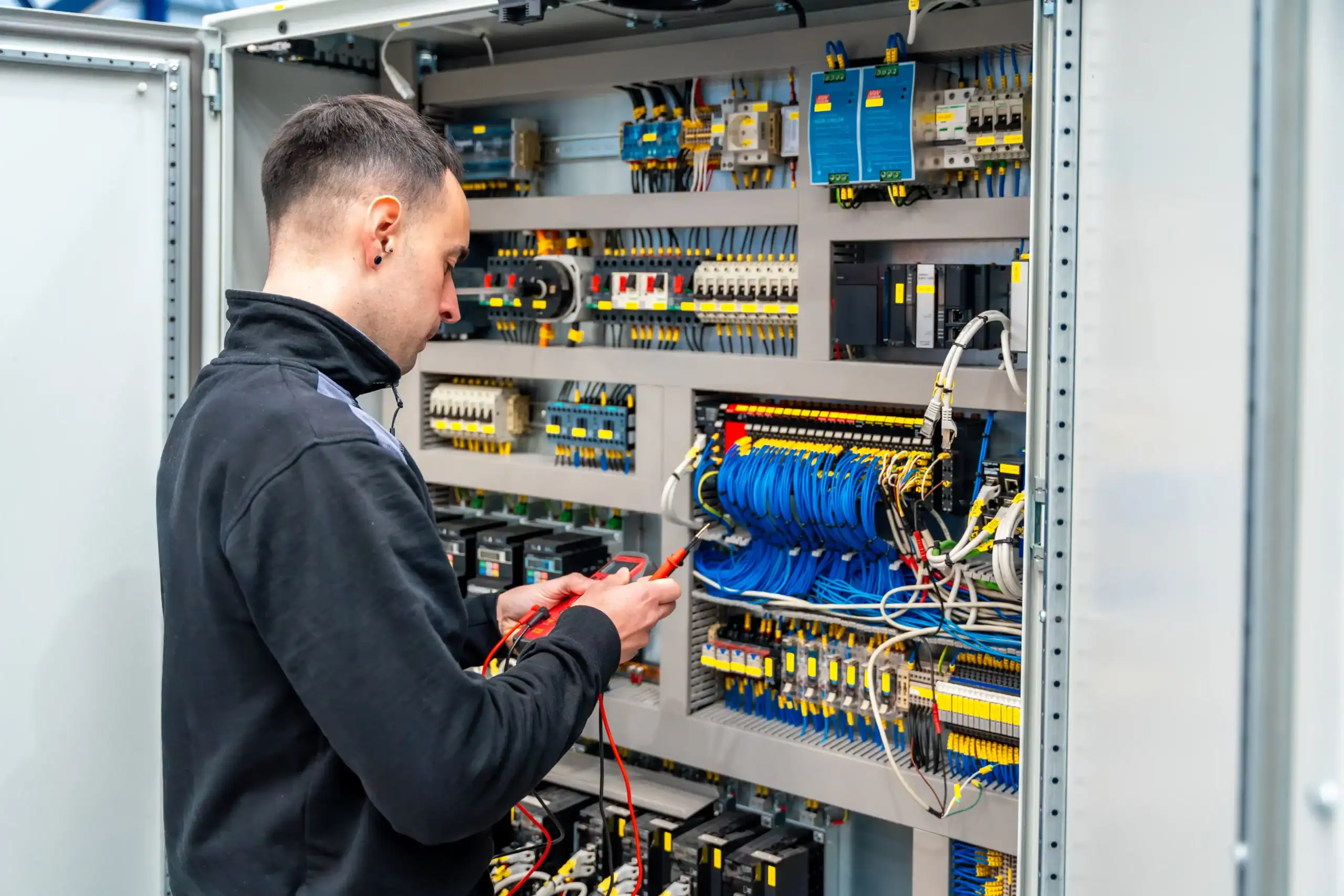
Testing provides information that visual inspection cannot. It helps confirm whether components are operating within acceptable limits and whether the system remains suitable for continued service.
For example, insulation resistance testing can help identify insulation deterioration. Contact resistance testing can help detect poor connections or worn contacts. Protective relay testing helps confirm that relays respond correctly under specified conditions. Breaker testing can help identify mechanical or electrical performance issues before they affect system reliability.
Thermal imaging is also useful because it can identify heat patterns while equipment is operating. Hot spots may point to loose connections, overloaded circuits, unbalanced loads, deteriorating components, or other developing issues.
Testing should be performed by qualified professionals using appropriate equipment and safe work practices. It should also be documented clearly so results can be compared over time. One set of test results is useful. Several years of organized test data are much more valuable because they show trends.
Maintenance Frequency: How Often Should Switchgear Be Tested?
There is no single schedule that fits every facility. The right maintenance interval depends on several factors, including equipment age, operating environment, system criticality, manufacturer guidance, service conditions, and facility risk tolerance.
A hospital, data center, industrial process facility, or emergency operations center may require more frequent attention than a smaller office building with lower operational risk. Equipment exposed to heat, dust, humidity, vibration, corrosion, or heavy loading may also need more frequent inspections and testing.
Facilities should consider:
How critical the equipment is to operations
Whether the equipment supports life safety or emergency systems
Age and condition of the switchgear
Previous maintenance history
Past failure or trip events
Environmental exposure
Load profile and duty cycle
Manufacturer recommendations
Insurance or compliance requirements
Results from previous testing
The key is consistency. A documented maintenance schedule helps facility teams avoid the common trap of reacting only when something fails.
Documentation Is Part of Maintenance
Switchgear maintenance is not complete unless the work is documented. Clear records help facility owners, contractors, engineers, and safety teams understand what was inspected, what was tested, what results were found, and what corrective action was recommended.
Good documentation may include:
Date of inspection or testing
Equipment identification
Technician notes
Test methods used
Measured values
Photos or thermal images
Breaker settings
Recommended repairs
Completed corrective action
Updated drawings or labels
Parts replaced
Future maintenance recommendations
Documentation is especially important after renovations, service upgrades, equipment replacements, or major load changes. Without accurate records, future teams may be forced to make decisions based on assumptions.
How Switchgear Maintenance Connects to System Planning
Switchgear maintenance is not just about preventing failure. It also helps with long-term planning. If testing reveals aging components, overloaded equipment, or recurring heat issues, facility teams can budget for upgrades before an emergency occurs.
This is particularly useful when planning building expansions, equipment additions, EV charging infrastructure, backup power systems, or tenant improvements. If the switchgear is already operating near capacity or showing signs of deterioration, adding new load without review can create bigger problems later.
Commercial facilities should also consider how switchgear connects to panelboards, breakers, and downstream distribution equipment. Dominion’s guide to Square D breaker boxes provides useful context on why reliable panel equipment matters within the broader electrical system.
Common Switchgear Maintenance Mistakes
Even experienced facility teams can run into problems when maintenance programs are informal or incomplete.
Common mistakes include:
Skipping maintenance because equipment “seems fine”
Not keeping updated single-line diagrams
Ignoring minor heat issues
Failing to exercise breakers
Letting electrical rooms become storage areas
Not documenting test results
Using outdated labels
Waiting until an outage to inspect equipment
Not reviewing changes after load additions
Treating cleaning as a substitute for testing
Using unqualified personnel for technical work
The biggest issue is usually inconsistency. Switchgear can remain reliable for years, but only when inspection, testing, documentation, and corrective action are handled with discipline.
Final Thoughts
Switchgear testing and maintenance protects more than electrical equipment. It protects uptime, safety, operations, budgets, and the people who work around commercial power systems. For facility owners and managers, a proactive maintenance program is far less stressful than emergency troubleshooting after a failure.
Well-maintained switchgear gives building teams more control. It helps identify issues early, supports safer work practices, improves documentation, and allows repairs or upgrades to be planned instead of rushed. In complex commercial facilities, that kind of predictability matters.
Whether your facility is managing aging equipment, planning an expansion, supporting critical operations, or simply trying to reduce electrical risk, switchgear should be part of the maintenance conversation. The more organized the program, the better positioned your facility will be to keep power moving safely and reliably.
 Spanish
  English